
n commercial shipping and marine transport, fuel consumption accounts for up to 50% to 60% of total operational costs. With rising bunker fuel prices and tightening environmental regulations like the IMO Carbon Intensity Indicator (CII), ship operators can no longer rely on manual logbooks and estimated fuel usage.
Modern vessel telemetry and engine management systems turn raw engine data into actionable cost savings, extending asset lifespan and optimizing every voyage from port to port.
Core Features of Modern Marine Telemetry & Fuel Control
Integrating sensor networks with marine communication protocols gives fleet managers complete control over vessel performance, both on-board and from shore.
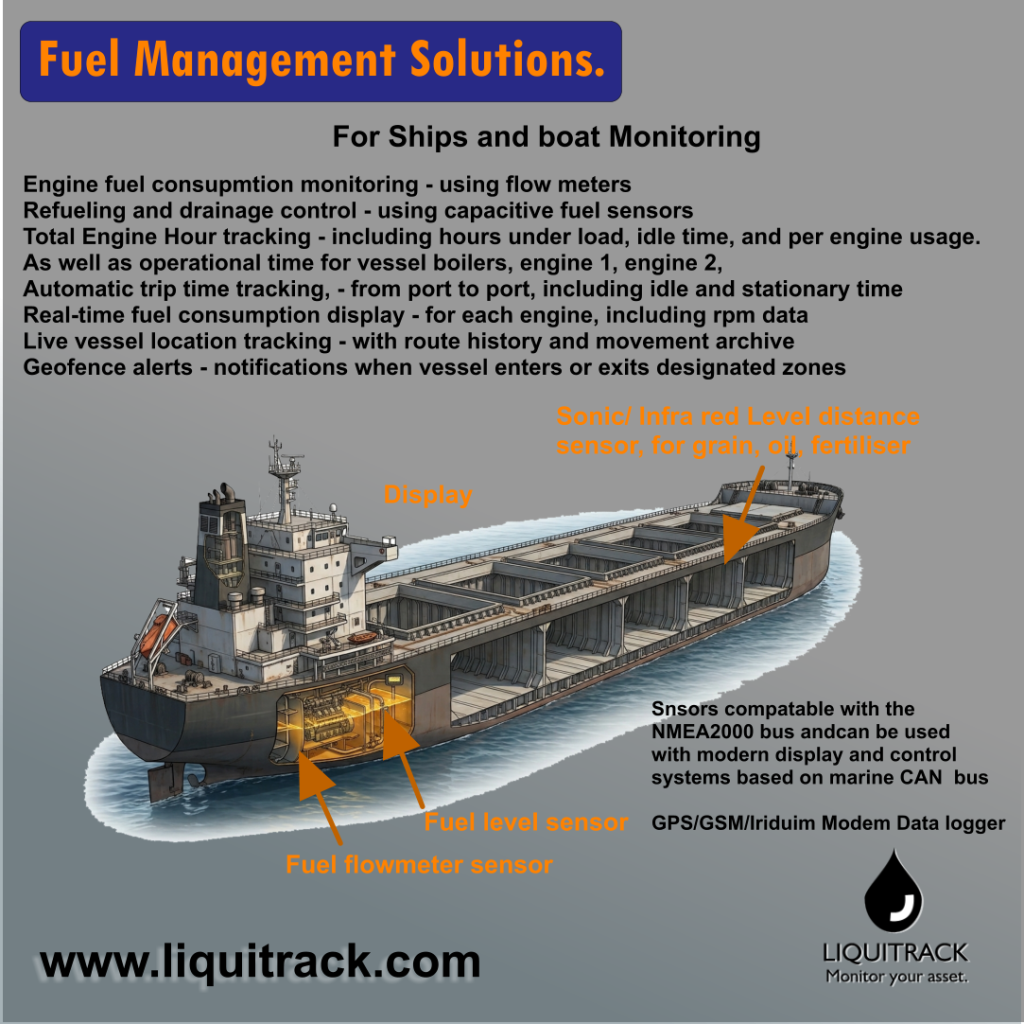
- High-Precision Engine Fuel Consumption Monitoring
By installing marine-grade fuel flow meters on engine supply and return lines, operators obtain precise burn rates in real time. This micro-level monitoring reveals exactly how engine load, weather, and speed impact fuel efficiency. - Refueling & Drainage Control with Capacitive Sensors
Bulk fuel tanks require continuous monitoring to manage inventory and audit bunkering operations:
Capacitive Fuel Sensors: Continuously track fuel levels across variable tank shapes, unaffected by vessel motion or pitch.
Bunkering & Theft Protection: Instantly log refueling events to match delivered volumes against invoices, and receive immediate alerts for unauthorized fuel drainage.
- Total Engine Hour & Asset Tracking
A vessel operates across multiple power demands. Advanced tracking separates total operating hours into distinct categories:
Duty Breakdown: Track actual hours under heavy load versus excessive idling.
Multi-Engine & Boiler Monitoring: Log distinct operational hours for Engine 1, Engine 2, and auxiliary boilers, giving an accurate picture of individual asset wear and maintenance schedules.
- Automatic Port-to-Port Trip Time Tracking
Automate voyage logging with smart software that calculates exact voyage statistics from departure to arrival. The system breaks down each trip into active transit time, stationary time at anchor, and idle time at berth—helping captains optimize speed profiles for future routes. - Real-Time On-Board Displays (RPM & Fuel Burn)
Captains and engineers need instant performance metrics inside the wheelhouse. Integrated displays show live fuel burn alongside engine RPM data, allowing operators to find the vessel’s optimal “sweet spot” for fuel efficiency without sacrificing transit times. - Live Location Tracking & Historical Route Archives
Integrated GPS systems provide real-time vessel position tracking, route history, and movement archives. Back-office teams can review historic speed profiles, track route deviations, and optimize vessel dispatching. - Geofence Alerts & Zone Management
Set up digital boundaries around specific ports, ECA (Emission Control Areas), or restricted zones. Automated geofence notifications alert operators the moment a vessel enters or exits designated areas, streamlining port calls and compliance reporting.
Seamless Integration & Global Connectivity
To ensure reliable data transfer, modern telemetry hardware integrates seamlessly with existing marine infrastructure:
NMEA 2000 & Marine CAN Bus Compatibility: Sensors connect directly to standard NMEA 2000 networks and marine CAN bus systems, displaying data on modern multi-function displays (MFDs) without complex rewiring.
Hybrid GPS/GSM/Iridium Data Loggers: Ensure zero data loss regardless of location. The system uses low-cost GSM cellular networks near shore and automatically switches to Iridium satellite communication when operating out in open water.
The Strategic Advantage
Implementing continuous fuel and engine management turns maritime telemetry from an operational expense into a major profit driver. Vessel operators typically cut fuel overhead by 7% to 15% simply by reducing idle burn rates, optimizing speed over ground, and eliminating fuel discrepancies during bunkering.
Leave a Reply