
In the rail transport sector, fuel accounts for up to 40% of total operational costs. With rising fuel prices and strict emission regulations, relying on manual logs or estimate-based reporting is no longer sustainable. Real-time locomotive fuel monitoring and engine management systems transform raw telemetry into actionable cost savings.
The Core Features of Smart Engine & Fuel Telemetry
Integrating sensor-driven monitoring across your fleet gives you full visibility over engine performance, operational states, and fuel consumption.
- Precision Fuel Measurement: Flow, Level, and Weight Sensors
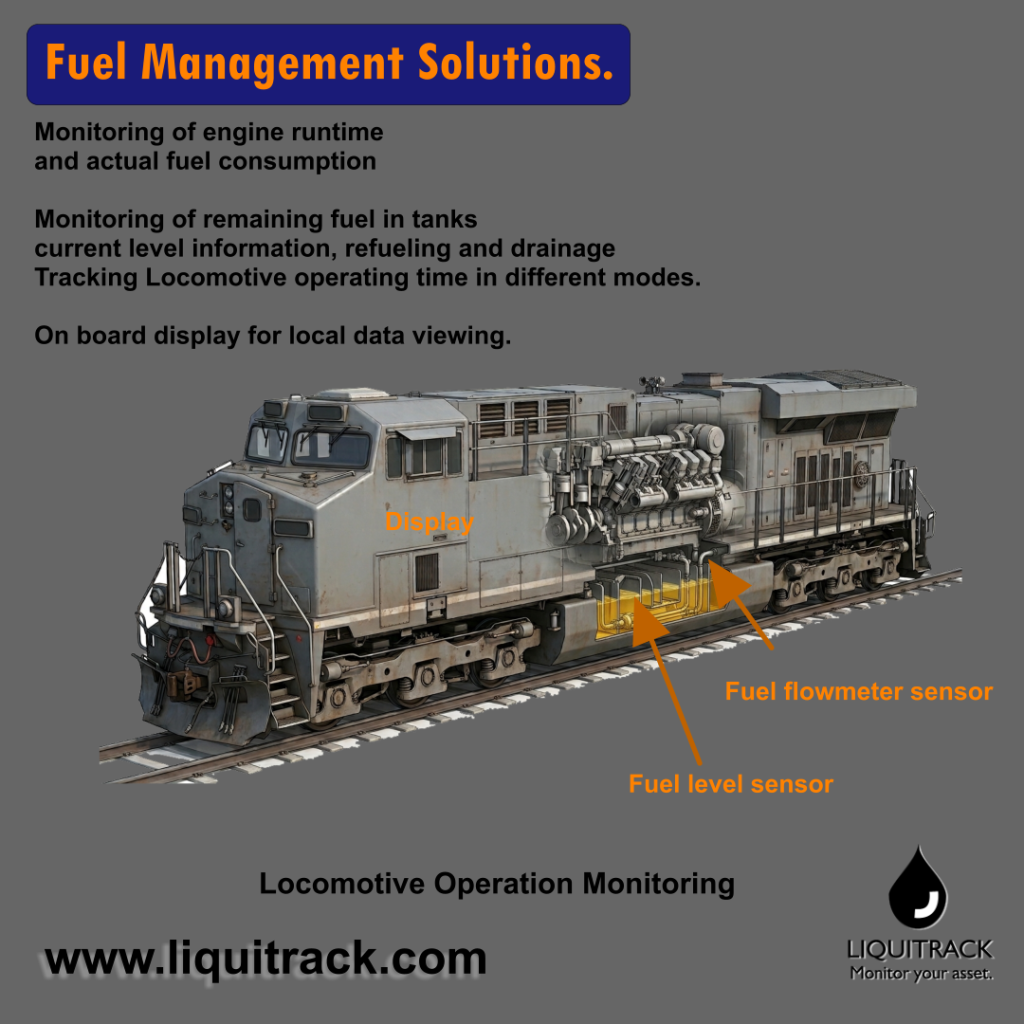
Traditional float sensors miss small fuel losses and struggle with incline angles. Modern telemetry combines fuel flow sensors (measuring exact burn rates in real time) with high-precision fuel level and weight sensors installed inside the tanks. This multi-sensor approach ensures high accuracy even while the train is in motion. - Live Tank Levels, Refueling, and Theft Detection
Real-time tracking of fuel levels provides an accurate view of remaining fuel at any moment.
Refueling Audits: Automatically record exact volumes added during fill-ups to verify supplier invoices.
Drainage Alerts: Flag unauthorized fuel drops or sudden drops caused by tank leaks instantly.
- Operating Time & Throttle Mode Tracking
A locomotive consumes vastly different amounts of fuel depending on how it’s operated. Advanced engine management tracks total runtime and breaks down operating time across different modes:
Idle vs. Notch Power: Highlight excessive idling—one of the largest causes of wasted fuel and unnecessary engine wear.
Dynamic Braking & Duty Cycles: Understand how hard the engine works during every section of the route.
- Engine Runtime & Actual Fuel Burn Analysis
Correlating total engine runtime with actual fuel consumption lets fleet managers calculate precise burn rates per ton-mile. This data helps schedule preventative maintenance before major mechanical failures occur. - On-Board Display for Local Data Viewing
Operators and engineers need instant feedback without waiting for back-office reports. An on-board display provides immediate visibility into engine diagnostics, fuel reserves, and system warnings right inside the cab.
The Bottom Line
Implementing real-time engine monitoring turns fuel management from a massive variable cost into a predictable, optimized asset. Fleet operators typically see fuel savings of 5% to 15% simply by cutting unnecessary idle time and curbing fuel loss.
Leave a Reply